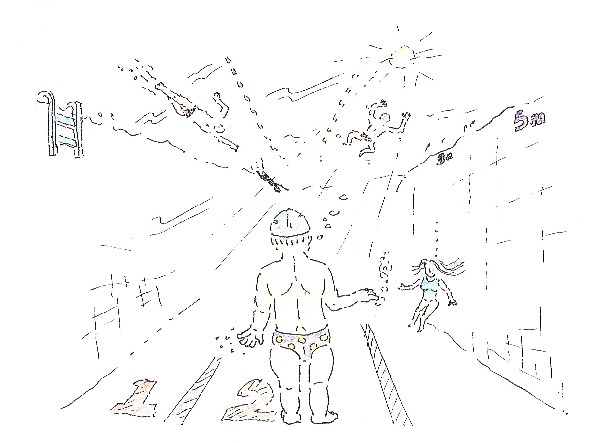
我潛到五米的水深。很靜、很靜,只有氣泡的聲音。
不下水的,都害怕被淹沒;下了水的,才明白這多難。
我吃力地向下游,呼出所有空氣,才來到五米深的池底。
沒有呼吸,只有氣泡。
我向上望,都是些拚命向前游的人。
來來回回的,不停地游。不知是被追趕,還是在追趕。
留下了一堆堆白色的泡沫,在陽光下閃閃發亮。
龐大的壓力,似要把我耳朵壓碎,暈眩之中,我看到了天使。
她就在三米處。
沒有呼吸,只有氣泡。
很靜、很靜,只有氣泡的聲音。
 今天的夫妻制度並不一定如聖經所說由創世時定下的。心理學裏有一門叫進化心理學 (Evolutionary Psychology),其中最具爭議的就是有關男女關係的「森林定律」(The Law of the Jungle)。
 說起這些,其實是因為 Paulo Coelho (2005) 的《Zahir》裏,有一個比喻。他說我們現在的火車軌,都是 143.5 厘米闊。為什麼呢?只因羅馬時代的馬車車輪是那樣闊;而那又與兩匹馬栓在一起的距離有關。於是由羅馬時代到現今的電氣化火車,路軌都是 143.5 厘米闊;這竟一直影響到穿梭機的油箱大小,事關那油箱要用火車運去太空總署。他用那古老的 143.5 厘米,比喻夫妻的距離。在進化之始,我們便要在「有效繁殖」的前提下,找出男女最理想的距離。太遠,男人照顧不了自己的女人與子女;太近,男人不能拈花惹草,增加生育。於是他提出了一個問題:如果撇掉因進化而產生的古老社會制度,純粹從愛 (留意,愛不同慾) 出發,怎樣的距離才是最理想呢?
 民主,是讓森林定律繼續下去的另一個原因。生活在低下階層的,主要娛樂只有性,但節育的資源少,於是他們的後裔也多,想想非洲便明白。如果一人一票,這個階層便會成為社會的主人。回想所有無產階級革命,都是用「民主」行頭的。再想,美國為什麼會選個白痴做總統?因為民主,再配合了我們「越高教育越少生育」的反進化思想。所以《世界是平的》(Friedman, 2006) 才說,在未有強大的中產階層之前,改革是要「批發式」的,亦既由少數人從上而下,好像鄧小平和李光耀那樣;到教育很普及時才可以有「零售式改革」,即真正的民主。然而,如果有教育的人都不生育,後果便不難想像。所以作者湯馬斯.佛里曼 (Thomas Friedman) 才說,要關心「未平的世界」,特別是教育。
 對了,是一個。全都是精子和卵子結合出來的那一顆細胞,再分裂出來的。所以,最早分裂出來的那些細胞,能夠變成身體上任何一部分的細胞,它們就是所謂「全能幹細胞」(Totipotent Stem Cell)。
 那為什麼布殊反對呢 (Berger, 2001)?如果你記得我剛才說的,仔細一想,便會明白。「幹細胞」的製造,要來自胚胎。雖然那胚胎只有五十至一百顆細胞,但那仍是一個可以長成一個人的胚胎。所以早於 1995,美國克林頓總統便已禁止了聯邦對此研究的所有資助;而直至現在,我們還未有其他方法提鍊出「幹細胞」。究竟那數十粒細胞算不算有生命、有靈魂,我讓你去判斷。
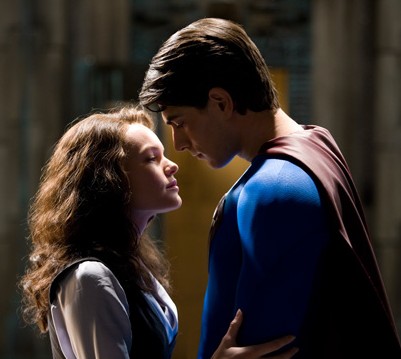 但我不是時常到戲院的。很多好戲,有好戲本的或得獎的,我大都在飛機上看了。今屆得奧斯卡的電影,我全在那三寸的屏幕上欣賞,只有《斷背山》和《撞車》是在戲院看的。然而,有一種片,就是那些過千萬大製作、極多電腦效果、做足環迴音響,但很多人嗤之以鼻的商業片,我卻常到戲院看。事關它們沒有什麼劇情,故若之後看 DVD 或在飛機上三寸的屏幕上看,便很易會睡著。所以諸如《King Kong》、《X-Men》、《鬼域》、以及今次主題《超人強戰回歸》,必須到戲院看。《King Kong》是我們姊妹公司的製作,當然要看;《鬼域》是一幅幅電腦藝術品的合成,一定要在大銀幕看。我亦很欣賞現在在電影中心重播的奇斯洛夫斯基作品。但若你像我表弟那樣開始談戀愛,那你一定要看《超人強戰回歸》。它裏面實在有大多教訓,且讓我摘錄一些心得如下 (含內容):
 終於一個月又過去,而我卻一直未能寫出這一篇文章。現在你能看到它,真要感謝經常延誤的上海航班。忙,有時是一個藉口,然而在短短三個星期內同時要去印度、泰國和上海公幹,實在令人疲累;加上最近研究的神經心理學 (Neuropsychology),讓我目眩神迷,腦袋充滿了大腦裏每一條高低坑紋的拉丁學名,什麼海馬迴 (Hippocampus)、杏仁核 (Amygdala) 等,差點以為身在火星學著火星語。最要命的是世界杯到了八強、同事又借了套《24》(一套講反恐的劇集) 給我,實在連睡覺都沒時間,別說寫網誌!
 說起神經心理學,如果你也想感受一下它的魅力,千萬別錯過薩克斯醫生 (Sacks, 1985) 的《錯把太太當帽子的人》。而在薩克斯的眾多故事裏,有一個患了 Korsakoff's Syndrome (或譯「高沙可夫症候群」) 的病人,故且叫 G,讓我深陷於一些問題而幾乎不能自拔。
| The Beginning (開端) | |
| On a sunny and warm afternoon, three grandchildren of the old Papa were playing under an olive tree. The eldest one was named Adam, followed by his sister Sophia, and the youngest one, Thomas. They were discussing who planted the tree. | 一個陽光和煦的下午,老爺爺的三個小孫子正在橄欖樹下玩耍。他們分別是大哥小正、二姊小穎與小弟弟小明。他們正在討論關於橄欖樹的問題。 |
| Thomas started in awe, "To plant such a big tree, you must need the strength of an ox! Perhaps it was our Ox that ploughs our field." | 小明讚嘆道:「要種這麼大的一棵樹,恐怕要我們家的大公牛才辦得到吧?」 |
| "My little brother, an Ox would not pull up a tree without someone asking it to do so," said Adam, with a tone of authority. "Therefore, the Creator of the tree must be an adult, or a few adults, who are human like us. They ordered the mighty ox to plant the tree." | 大哥小正答道:「傻小子,公牛才不會無原無故去種樹呢!一定是有大人叫我們的公牛去豎起這棵樹的。他們才是創造這樹的人。」 |
| "How can they order the Ox?" little Thomas asked. | 小明好奇道:「大人怎樣吩咐一頭牛呢?」 |
| "Maybe they also created the Ox like they planted the tree... Yes, they must have created everything. When we grow up, we may be like them too! By then I can create a horse for you to ride!" Adam said proudly. |  小正說:「也許我們的公牛也是大人們造的。對了,大人們一定是所有東西的創造者。媽說我也快長大成人了呢!到時我便能像他們一樣厲害,我還可以變匹馬出來讓你騎騎!」 小正說:「也許我們的公牛也是大人們造的。對了,大人們一定是所有東西的創造者。媽說我也快長大成人了呢!到時我便能像他們一樣厲害,我還可以變匹馬出來讓你騎騎!」 |
| Sophia, who has been sitting quietly under the shade, spoke up. "If the adults are so powerful, then why would our Ox die last time?" | 一直坐在樹蔭下默不作聲的小穎忽然說:「如果大人真的那麼厲害,那我們之前的那頭牛便不會死了。」 |
| "Hmmm… Perhaps it was naughty? They punish it for being naughty?" Adam said uncertainly. | 小正猶豫起來:「是否因為牠做錯了什麼事?也許死亡是一種懲罰?」 |
 "Isn't it true that whatever the Ox does follows whatever the adults have instructed? Adults who created our ox must be not wise enough. They haven't figured out how to create completely obedient ox or ox without death. There must be a more mighty Power that can create everything, including all the adults and children, perhaps life without death too." Sophia said thoughtfully. "Isn't it true that whatever the Ox does follows whatever the adults have instructed? Adults who created our ox must be not wise enough. They haven't figured out how to create completely obedient ox or ox without death. There must be a more mighty Power that can create everything, including all the adults and children, perhaps life without death too." Sophia said thoughtfully. | 細心的小穎說:「剛才我們不是說,公牛只做大人吩咐的工作?如果公牛不聽話,也是大人的責任吧?也許大人們根本不能造出一頭不會抗命、或都不會死的公牛。一定有更強大的力量創造了大人、小朋友、公牛,甚至不會死的生命。」 |
| "Maybe it is what the adults named 'God'? I heard that if we misbehave ourselves, the adults will tell our God, and He will then punish us in the future!" Adam said sheepishly. | 小正囁嚅道:「也許那便是大人們說的『神』?好像有人說如果我們做錯事,大人們便會告訴神,神將來便會懲罰我們罷?」 |
| "I believe we don't have to go through the adults to contact that Power. As it created us, we should be able to connect to the Power by ourselves, maybe through some charms?" | 小穎答說:「如果我們真是神的創造,我們便不需要大人們的教導或傳話,也應該能與它連繫起來吧。也許我們需要學些咒語之類?」 |
| Bibliography: Campbell, J. & Moyers, B. (1991). In Flowers, B. S. (Ed.), The power of myth. Bantam Doubleday Dell. Retrieved from http://search.barnesandnoble.com/booksearch/isbnInquiry.asp?isbn=0385418868 Pagels, E. (1989). Gnostic gospels. Knopf. Retrieved from http://search.barnesandnoble.com/booksearch/isbnInquiry.asp?isbn=0679724532 | |
| The Orthodox (正統) | |
| Just then, their mother, Maria, passed by, returning from the river after doing the laundry. Maria overheard what they were discussing, and couldn't help smiling. She walked towards them and said tenderly, "Oh my dearest, you know, all the beautiful things in the world, including this tree, our ox, the sun up in the sky, as well as you three, my beloved children, are all the creation of the Lord our God." | 他們的母親剛好從河邊濯洗回來,隱約聽到他們的討論,忍不住微笑起來。她對他們溫柔地說:「傻孩子,這世上所有美麗的東西,無論是一花一草、陽光與公牛、以及我最愛的你們三個小精靈,都是全能的神的傑作啊!」 |
| "So our God created everything?" Thomas exclaimed. | 小明讚嘆說:「那我們的神真的創了所有東西了?」 |
| "Yes, my child. He is almighty and nothing is impossible for him." | 「真的,孩子。祂是全能的,在祂來說沒有東西是不可能的。」母親說。 |
| "Then why would our Ox die?" Adam asked. | 「那為什麼我們的公牛會死掉呢?」小正問。 |
| "Death is just a way to get closer to God. Our God lives high up in the sky, and our body is just too heavy to fly up there. When we die, we leave our body in earth, and our spirit will fly to the sky to meet Him." | 「死亡只是一個靠近神的途徑罷。神住在高高的天上,而我們用泥土做的身體卻太重,飛不上去,只好在死亡的時候把身體交還大地,讓自由的靈魂從此高飛,你能明白嗎?」 |
| "O, so we'll meet God one day then! Is God like us?" Thomas asked. | 「噢,那我們最終會見到祂呢!祂怎麼樣的?是不是跟我們一樣?」小明問道。 |
| "God has three faces. God can be the power of creation, God can be like us as a human-being, or God can be like wind that sustains life." Maria said softly. | 「唔,這樣說吧,祂有三個不同的面孔:祂有時是創造萬物的力量,有時像人一樣有血有肉有感情,也有時會像和風一樣,滋潤萬物。」母親輕輕地解釋著。 |
| "So there are many Gods?" Thomas asked. | 「那就是說我們有很多不同的神了?」小明又問。 |
| "No, my son. Let me ask you, how many water(s) are there in the world?" | 「孩子,不是的;不如你告訴我,世上有多少個或多少種『水』?」 |
| "Water is water, isn't it uncountable, mom?" Adam answered. | 「水?水便是水,不是不能數的嗎?」小正說。 |
 "Yes, Adam. However, water can sometimes be a power that can break through the rock on the mountain and split the earth into lands. Water can also turn itself into ice that you can feel and touch, or into snow that can touch your face. Water is sometimes like air or like wind, as cloud or as steam. It flies freely over the seas and over the hills, comes out from the trees and goes in your breath. It nourishes every life form yet its shape we don't know. So is water the stream, the ice, or the humid blow?" "Yes, Adam. However, water can sometimes be a power that can break through the rock on the mountain and split the earth into lands. Water can also turn itself into ice that you can feel and touch, or into snow that can touch your face. Water is sometimes like air or like wind, as cloud or as steam. It flies freely over the seas and over the hills, comes out from the trees and goes in your breath. It nourishes every life form yet its shape we don't know. So is water the stream, the ice, or the humid blow?" | 「不錯呢,小正。然而,水有時是一股能開山穿石的力量,有時又能凝固成你能觸碰的雪花,甚至能變成你看不到的水氣與雲朵,飛越大海與山嶺,穿過叢林並走進你每一口呼吸裏。它潤澤大地上的生命,卻沒有你能描述的形狀。現在你們說,水究竟是那河溪、那冰雪、還是那濕潤的春風呢?」 |
| "It sometimes gives life but sometimes takes life. It cleans the dirt but never get dirt. It exists before all existence and will stay on till the end of Earth. Isn't it like God, the Love that we are trying to learn?" Coming to his wife and children, Francis joined the little discussion in his family. | 一把洪亮的聲音響起來:「它能賦與生命也能帶走生命,洗滌污穢卻永遠清明。它在萬物化生之前便已存在,一直到世界的終結。你說那像不像神、那塵世間的大愛?」 |
| "Dad!" The children all screamed together and rushed to hug their father. | 「爸!」小孩們都興奮地跳起來,搶著要擁抱他們的父親。 |
| "Someone admire God's power and have faith in Him. Someone follow His example and have love for the fellow men. Someone chase the wind and learn the wisdom to understand." Francis said to his children. "However, anyone who cannot find joy and peace in their faith, but judgment and obstinacy instead, they are going astray. A grateful heart is always filled with joy, and a faithful heart with peace." |  父親繼續說:「有的敬畏祂的大能而信靠祂,有的追隨祂的教導而服務人,也有的尋找祂的智慧而得平安與自由。誰若不能從信仰中活出平安與喜樂,心中充滿批判與執著,誰便是在信邪教。感恩的心,常樂;信靠的心,平安。」 父親繼續說:「有的敬畏祂的大能而信靠祂,有的追隨祂的教導而服務人,也有的尋找祂的智慧而得平安與自由。誰若不能從信仰中活出平安與喜樂,心中充滿批判與執著,誰便是在信邪教。感恩的心,常樂;信靠的心,平安。」 |
| "Who has the wisdom and can explain?" Sophia asked. | 「又有誰能給我解釋那智慧呢?」小穎問。 |
| "Ask your old Papa and old Mama, my lovely girl," answered Maria. | 「去問你的老爺爺和奶奶吧,小穎。」母親答說。 |
| Bibliography: Gellman, M., Hartman, T., & Smith, J. A. (1997). How do you spell God? HarperCollins. Retrieved from http://search.barnesandnoble.com/booksearch/isbnInquiry.asp?isbn=0688152961 Smith, H. (1991). The world's religions: Our great wisdom traditions. HarperCollins. Retrieved from http://search.barnesandnoble.com/booksearch/isbnInquiry.asp?isbn=0062508113 Teresa, Mother & Vardey, L. (1995). Simple path. Random House. Retrieved from http://search.barnesandnoble.com/booksearch/isbnInquiry.asp?isbn=0345397452 | |
| The Mystic (神秘) | |
| Adam, Sophia, and Thomas went to visit the old Papa, but he was not at home. Old Mama took them in, and poured them her best tea. | 小正、小穎與小明一起跑到老爺爺處,但老爺爺卻正巧不在家。老奶奶於是讓他們在她家裏等待,並為他們泡了她很喜愛的紅茶。 |
| Thomas starts asking, "Old Mama, as you have lived for so long, have you seen the God? Is he like the stream, the steam, or the ice rock?" | 小明開始問道:「奶奶,你活了這麼久,有沒有見過神呢?祂是否像爸爸說的小溪、浮雲或冰塊呢?」 |
 Old Mama gently stroked his hair, and said with a smile, "My dear child, everyone can see God. If God is like the sea, you are the small water drop originated from Him. Go sit under the shade of a tree, and have you mind completely stops, stop even the idea of stopping your mind. You will then feel peace and eventually connected to the God." Old Mama gently stroked his hair, and said with a smile, "My dear child, everyone can see God. If God is like the sea, you are the small water drop originated from Him. Go sit under the shade of a tree, and have you mind completely stops, stop even the idea of stopping your mind. You will then feel peace and eventually connected to the God." |  老奶奶一邊輕撫孫子的髮絲,一邊笑著說:「孩子,人人都可以看見神。神彷彿一個汪洋,而你則是從它那裏來的一滴小水點。去,坐在樹蔭下,把你的心完全停下,連要停下的心也停下。當你感覺到那無盡的平安襲來,你便是和我們的神連成一體了。」 老奶奶一邊輕撫孫子的髮絲,一邊笑著說:「孩子,人人都可以看見神。神彷彿一個汪洋,而你則是從它那裏來的一滴小水點。去,坐在樹蔭下,把你的心完全停下,連要停下的心也停下。當你感覺到那無盡的平安襲來,你便是和我們的神連成一體了。」 |
| "What if I cannot stop my mind, old Mama?" Adam frowned. | 小正皺著眉說:「如果我不能停下我的心,那可以怎辦?」 |
| "Read the symbols on the tree bark, child. There is a loop here and a stroke there. From the bottom to the top, written the mystery of God. Smell the grass and count to nine, say 'Oum' and close your eyes. You will see God between the lines." | 「那你可以對著樹皮上的符號默想,那便是神寫下的暗語,由根部到枝條,滿載著神的秘密呢。深深地將草香吸進身體裏,由一數到九,閉上眼睛呼氣,一邊唱出『唵』這個音,神便會出現了。」 |
| Sophia suddenly understood, and she kneeled down with tears rolling down her cheek. Adam thought she was so odd, and still believed it was their fault that separated them from God. | 小穎忽然有所瞭解,突然跪在地上並流下眼淚來。小正還未能明白,只覺得這些都很古怪;他還是有點相信神是會懲罰頑皮的小朋友的。 |
| Bibliography: Osho. (2000). Autobiography of a spiritually incorrect mystic. St. Martin's Press. Retrieved from http://search.barnesandnoble.com/booksearch/isbnInquiry.asp?isbn=0312280718, http://www.books.com.tw/exep/prod/booksfile.php?item=0010210832 Rinpoche, S. (1993). In Harvey, A. (Ed.). The Tibetan book of living and dying. HarperCollins. Retrieved from http://search.barnesandnoble.com/booksearch/isbnInquiry.asp?isbn=0062508342 | |
| The New Age (新紀元) | |
| Thomas was not satisfied. He had so many questions left unanswered. He was trailing along the river when he suddenly met the old Papa. | 小明還是覺得有點不足,彷彿心裏尚有很多問題未問似的。他沿著河邊徐徐地走著,竟給他遇上了老爺爺。 |
 Old Papa took him up to the top of a small hill, and invited the little child to join him watching the sunset. They sat there in silence and it seemed neither one would talk. Old Papa took him up to the top of a small hill, and invited the little child to join him watching the sunset. They sat there in silence and it seemed neither one would talk. | 老爺爺帶小明走上一個小山丘,讓小明與他一起看夕陽與晚霞。他們一起坐著,誰也沒有說話。 |
| Suddenly, old Papa spoke. "Son, we are all one." | 到太陽逐漸消失在地平線下時,老爺爺忽然說:「孩子,我們都是一體。」 |
| "Old Papa, you mean you and I are one?" Thomas was puzzled. | 「老爺爺,你是說我和你都是一體?」小明迷惑地說。 |
 "Yes, not only you and me, but also the sun, the hill, the cloud, the stream, the trees, the birds, and you and me. we all belong to the divine power. God was like the sea, sea of life, broken down into water-drops, water-drops that have boundaries. All water drops will one day join the sea, from where they may split and lock themselves inside the boundary again. One day they will learn what they need to learn, and return to help those waiting to be freed." "Yes, not only you and me, but also the sun, the hill, the cloud, the stream, the trees, the birds, and you and me. we all belong to the divine power. God was like the sea, sea of life, broken down into water-drops, water-drops that have boundaries. All water drops will one day join the sea, from where they may split and lock themselves inside the boundary again. One day they will learn what they need to learn, and return to help those waiting to be freed." | 「是的,但不止我和你,還有太陽、山丘、雲朵、小溪、樹林、飛鳥、我和你。我們都是祂的一部分。祂是海,我們是水滴。是我們的自我做成了水滴的界限。是我們的差別心、批判心、和執著的心,叫我們離開了汪洋。有一天,當我們學會了我們要學的東西,那界限便會消失,我們便又成為海的一部分。也許我們還會再回來,去教那些執著自我的人釋放自己,重回大海裏。」 |
| "Old Papa, are you referring to the death of the Ox we have seen? Will it return as free? Is it part of the sea?" | 「老爺爺,那是不是就是死亡?好像我們家的牛一樣?那牠是否還會回來?牠是否也是神的一部分?」 |
| "You shall not enquire the reality, for the reality is your fantasy. If you believe you will see your Ox again, again you will see. If a water-drop merges with the sea, and comes out again as a water-drop, do you consider that 'reincarnation'? Words are limited. Open yourself to divine guidance, see the ocean in the water-drop, and you will meet the eternality through synchronicity." |  「不要有限的語言去瞭解無限的真相,你現在見到的都是幻象。如果你相信你會重遇你的牛,很快你們便能再相遇。試想想,一滴水匯流到海裏,然後一滴水也從海裏流了出來,你會稱這為『輪迴』嗎?試試將生命開放給神,試試在水滴裏看到汪洋,留下空間讓祂的計畫因你而成就。」 「不要有限的語言去瞭解無限的真相,你現在見到的都是幻象。如果你相信你會重遇你的牛,很快你們便能再相遇。試想想,一滴水匯流到海裏,然後一滴水也從海裏流了出來,你會稱這為『輪迴』嗎?試試將生命開放給神,試試在水滴裏看到汪洋,留下空間讓祂的計畫因你而成就。」 |
| "Do you mean I will meet God by chance?" | 「噢,那是否只要我不強求,便會遇上神?」 |
| "God is only in your heart. God and you are one, like water and the sea." | 「神就在你心裏。神與你是一體的,就如海和水。」 |
| "So will there be heaven and hell, and the fear I have for death?" | 「神不是住在天國嗎?壞人不是要下地獄嗎?那我應否害怕死亡呢?」 |
| "For water drops not realizing they are part of the sea, losing boundary comes so scary. Without boundary, love among us becomes so easy. Heaven is always within and hell is the boundary." | 「若果你明白海和水的關係,失去界限實在沒有什麼可怕的。自我的界限就是地獄的疆界,天國本是在人間;沒有自我的靈魂,自然有愛與仁。」 |
| Thomas was suddenly freed. From this point onwards he had no enquiry. Sitting side by side, they transcended their boundaries, and the Age of Aquarius had replaced the Age of Pisces silently. | 小明若有所悟,忽然覺得豁然開朗,甚至超越了和老爺爺之間的界限,也不知不覺間超越了這雙魚座紀元而進入了新的水瓶座紀元。 |
| Bibliography: Kübler-Ross, E. & Gold, T. (1998). Wheel of life: A memoir of living and dying. Scribner. Retrieved from http://search.barnesandnoble.com/booksearch/isbnInquiry.asp?isbn=0684846314 Redfield, J. (1998). The tenth insight: Holding the vision - further adventures of the Celestine prophecy. Warner. http://search.barnesandnoble.com/booksearch/isbnInquiry.asp?isbn=0446674575 Redfield, J. & Adrienne, C. (1995). The Celestine prophecy: An adventure. Warner. Retrieved from http://search.barnesandnoble.com/booksearch/isbnInquiry.asp?isbn=0446671002 Walsch, N. D. (1996). Conversations with god: An uncommon dialogue. Penguin. Retrieved from http://search.barnesandnoble.com/booksearch/isbnInquiry.asp?isbn=0399142789 Weiss, B. L. (1988). Many lives, many masters. Simon & Schuster. Retrieved from http://search.barnesandnoble.com/booksearch/isbnInquiry.asp?isbn=0671657860 | |
| Epilogue (後記) | |
| Just in time to publish this before the tab for May, 2006 disappears. This is my yet another trial to simplify my study on religion after the last article, Masters. As it turns out, my goal may be too aggressive for my writing skill to match. Anyway, I am glad that it is done. | 總算趕及在五月最後的一天登出這篇文章。這是繼《當受傅的遇上覺悟的》之後又一個眼高手低的嘗試,也是我第一次製作雙語文稿,還望大家不吝給我意見。 |
| This month has been really hectic, with some major change in my job role, a residential program in US which totally disturbed my biological clock, as well as a number of examinations which keep my adrenaline level high. Let's look forward to more time and thus more publishing next month! | 抱歉要大家等了那麼久,這個月實在是我寫網誌以來最忙的一個月。一方面我的工作的角色改變了,二方面我要到美國上課,令生理時鐘大亂,加上各式各樣的考試諸如樂理、電單車(即機車)等,終於等到今天端午佳節才有空發表此文。希望下個月能勤些寫作吧! |
 很多人以為福音書只有正統的四本:Matthew (瑪竇、馬太)、Mark (瑪爾谷、馬可)、Luke (路加) 和 John (若望、約翰)。其實教會有紀錄的福音書共五十多部 (Gigot, 1909),而《猶大福音》只是其中之一。這些一般被稱為 Apocrypha (Reid, 1907) 的次經或偽經,以 Gospel of Thomas (多默、多瑪、湯瑪士福音) 最為有名,還曾被拍成電影《神蹟魔兆》(Mancuso & Wainwright, 1999)。至於《猶大福音》的爭論點,即 Judas (猶達斯、猶大) 乃是耶穌最親密的門徒,肩負交出耶穌的宿命,甚至不惜為此遺臭萬年,亦見於另一本著名小說與同名電影:《基督最後的誘惑》(Kazantzakis, 1998)。
 這些論點,在早期教會是很流行的,特別是耶穌死後的一百至二百年之間;那時第一批門徒 (包括 Thomas 或 Judas 自己) 都過世了,也沒有誰會出來辨證真偽。難道 Judas 會在交出耶穌與吊頸自殺的倉卒之間,趕起一部書乎?很多也可能是像《基督最後的誘惑》般的想當然的創作而矣。
 自教會將這些次經定為異端邪說 (heresy) 後,壟斷所有教育組織的教會便有效地消滅了市面上的「毒草」。直到近幾十年,人們發現了死海古卷和埃及的納.哈馬地文庫(Nag Hammadi Library) 後,這些古籍才重見天日。我手上最齊全的紀錄與翻譯,要算 Robert Miller (1995) 的 The Complete Gospels,此書正巧在復活節送了給倉海君作洗禮的禮物;當年香港還沒有售,要到 Amazon 訂購;據檸檬茶透露,今天你已可在「塔冷通心靈書舍」買到 (註)。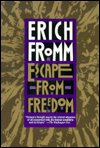
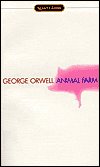 相信你早已知道誰是喬治.奧維爾 (George Orwell)。就算忘了,總也記得他寫的《動物農莊》(Orwell, 1944) 和《一九八四》(Orwell, 1949)。特別是《一九八四》,任誰讀過都會留下深刻印象;Orwellian 一詞更已變成一個代表極權主義的形容詞。書中的社會是由一個叫「英社」的黨專政,由「老大哥」領導,並用三句很有智慧的口號來教育人民:「戰爭即和平,自由即奴役,無知即力量」(War Is Peace, Ffeedom Is Slavery, Ignorance Is Strength)。不用看《一九八四》,只要仔細思考,你也能領會這三句口號的精彩之處。時至今天,仍有很多政治領袖用類似的方法去治理國家。且說「戰爭即和平」,為了和平,美國不能不冷戰;蘇聯瓦解,不得不打伊拉克;侯賽因倒台後,不得不向全球恐怖份子宣戰。總之,戰爭即和平。人們卻因為「自由即奴役」而「逃避自由」(Fromm, 1994),繼續選這些白痴領袖,以至出現紀錄今天仍然存在的荒謬政策的網站 (Jura, 2006),甚至有一個叫「老大哥獎」每年在全球各地頒發。
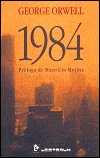 之所以會提起《一九八四》,是因為有天我和一位現已定居泰國的多年友人兼同事談起「新話」(Newspeak)。《一九八四》裏曾說,用縮寫能將一些文字的意思扭曲。譬如「納粹」(Nazi),是「國家社會主義」(Nationalsozialistische) 的簡稱,和其他國家的社會主義並沒有原則上的分別。然而憑著縮寫成「納粹」,德國人便也忘了本來的意思,只記得是好東西,卻借用了來提倡民族沙文主義,開始迫害其他民族。
 台北市是繼曼谷以後又一個我很喜歡的亞洲城市。台灣也是全亞洲除了香港以外,唯一一個四處張貼繁體中文字的地方。在曼谷,我特別愛到暹羅廣場 (Siam Square) 信步閒逛;而在台北,相似的地方在忠孝敦化站一帶。在這兩個地方,充滿創意的人將他們的心思都放在他們的小店裏,營造出一種藝術的氣息。這些心思,幻化成一間又一間的主題餐廳和精品小店,令人目不暇給,更常常不禁莞爾。忠孝敦化區附近的「金石堂」和「誠品書店」,更是讓濃濃的文藝氣息襲人而來。
 與一年前比較,忠孝敦化區有不少小店都結束了,但更新更有趣的店子又開了。工作不同旅遊,不能走馬看花地四處去,一來時間有限,二來下班後身心俱疲,所以一般都是「定點深度」旅行。忠孝敦化是忠孝東路與敦化南路的交會點,與忠孝路垂直的叫巷,與忠孝路平行的叫弄,而我則常在這些巷弄之間找到很多特別的店子:好像門口有一排電單車 (台灣人叫機車或摩托車) 的時裝店,賣的都是哲.古華拉的 T-Shirt;又好像門口幾乎給藤蔓掩蓋的香薰店,坐在櫃台的是兩隻熊啤啤。
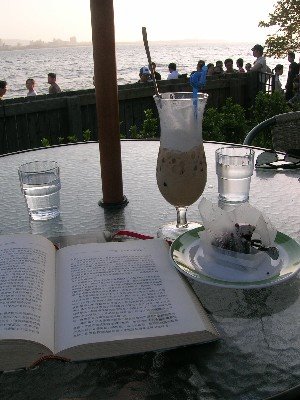
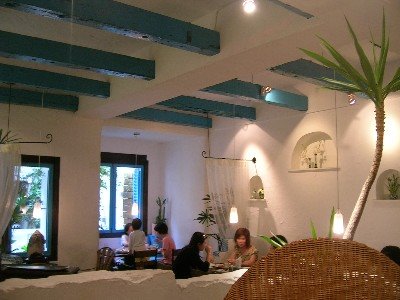 至於嗜吃的我,醉心的依然是各家大小餐廳。它們的名字便已夠新奇,諸如「紅九九」(火鍋店)、「菜真的很香」(海鮮店) 等;門面就更拍案叫絕,有用火車軌做入口的,有大笨象公仔坐著裝客人的,有像七十年代戲院一樣貼滿海報、甚至有售票處的。我個人最喜歡的,是一間叫「陽光空氣花和水」(Sun-Nature) 的餐廳,單是名字便已賞心悅目,能在店裏的梳化喝杯咖啡、聽聽音樂、看看書,便不難明白為什麼這裏的項目總是會延期完成了:不竟沒有什麼值得趕著做的吧?
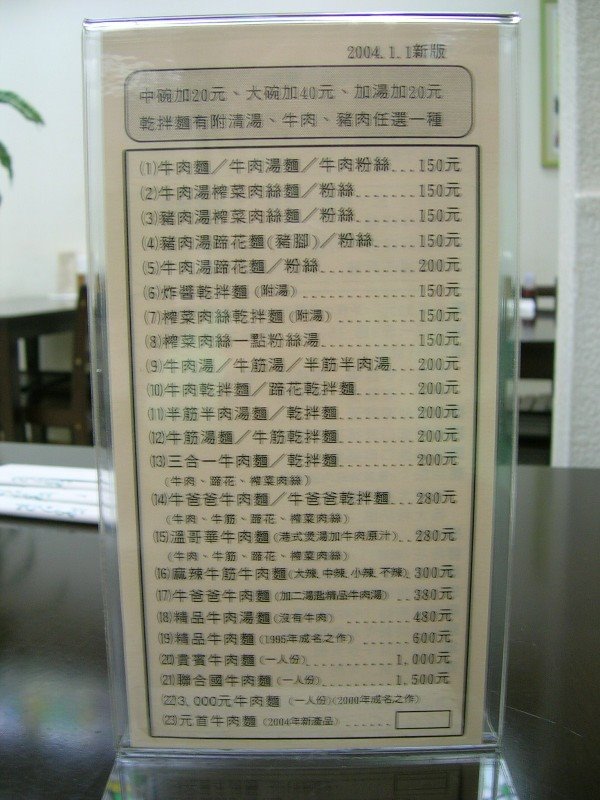 中國歷史述說的,大都是文弱書生一次又一次南遷的故事,故江浙文風不少都來台了吧?這裏的書都美一點多一點,音樂人亦全能一點,食物也就講究些吧?從「度小月」的 NT$ 50 (約 HK$ 12) 一碗肉臊麵,到「牛爸爸牛肉麵」賣到 NT$ 3,000 (約 HK$ 730!) 的牛肉麵,都一樣有名。數千元一碗麵我自問吃不起,但卻試食了 NT$ 300 (HK$ 73) 一碗的那款牛肉麵,感覺好像吃了個牛排餐,離開時大有肚滿腸肥之感。據說那碗三千元台幣的牛肉麵用的湯底,一條牛才能熬出三碗。如果你想試,可以用 NT$ 80 (HK$ 20) 買兩茶匙加進你的麵裏。廉價的食市也是俯拾皆是。公司同事帶我去午餐,便選了間火鍋店。我生平第一次午飯時間食火鍋,一個有菜有肉有飯有無限酸梅湯任飲的火鍋餐,才 NT$ 150 (HK$ 37),實在無得頂!
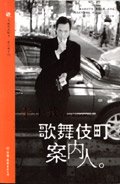 「案內人」是日文「導遊」的意思,也是李小牧先生對他自己的工作的堅稱。那他帶人到什麼地方呢?在世界知名的歌舞伎町,「遊客」去的當然是有點色情成分的酒吧、蒸浴、跳舞之類的地方,亦因此大家都叫他「扯皮條」。然而,小弟實在很佩服這位李先生。可能因為我總覺他的氣質與小弟有兩分似吧,我一看到封面便拿起來翻翻。原來他本是專業的芭蕾舞蹈員,在深圳是有房子的職員,但卻為了一個夢想,一個赴日學時裝設計的夢想,而放下一切,跑到日本。
 某程度上,我那麼欣賞他,可能和我與他有很多相似的想法有關;特別是自信與樂觀的想法。我還記得我的第一份工是敲門「賣自己」賣回來的。當時我中七畢業,見到有招收中五、中七畢業生的電腦班,我便上門和櫃台的職員說:「你們招那麼多學生,總要導師吧?」她答:「我們的導師全是大學畢業,或快畢業的學生,亦不會請暑期工!」為免和她理論,我二話不說,便要見她的老板。之後和那中心的負責人在房內面談了三個小時,終於說服了她聘請我;而且由於我喜歡教書,暑假後便繼續留任為兼職導師至大學二年級。
 成君憶 (2004) 在《水煮三國》的第一章裏,寫下了一個故事。話說劉備是一個窮書生,終於考進了大學,卻沒錢交學費,於是在絕望下向其吝嗇的叔叔借錢。他叔叔竟借給他,並說:「自助者天助。既然老天爺都願意幫助你,何況我這個做叔叔的呢?」成君憶跟著寫到:
 其中一場是雙方爭奪場中心的小水桶。我們互相牽制,陷於膠著狀態。小弟勇字當頭,便毅然放下手上的 AK-47,自動請纓,用「淩波微步」爬向前線取桶,並不忘招呼了大家一聲,叫他們掩護我。怎料我只是爬出了兩步便身中十多發流彈而亡。


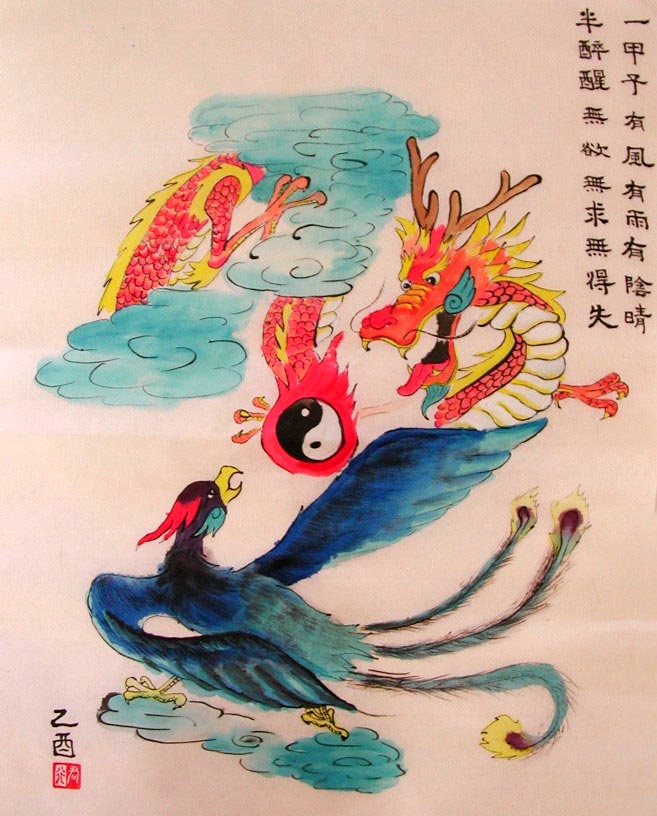



 記得倪匡衛斯理小說裏有一個叫《規律》(1995) 的故事,(含故事內容:) 述說有個殺手不斷令很多成功人士自殺,靠的就是畫出他們每天生活的路線,讓他們發現自己的生活其實和昆蟲一樣有規律而無意義。那故事為我留下了很深印象呢。
